
He had forgotten when it started, but he found himself living as a vampire hunter in a different world. Cursed to have a wall separating his inner emotions from his outward gestures, he is feared by those around him as a madman without his mischievous personality being known. This story tells the tale of whether he is fortunate or unfortunate as he builds his own era.
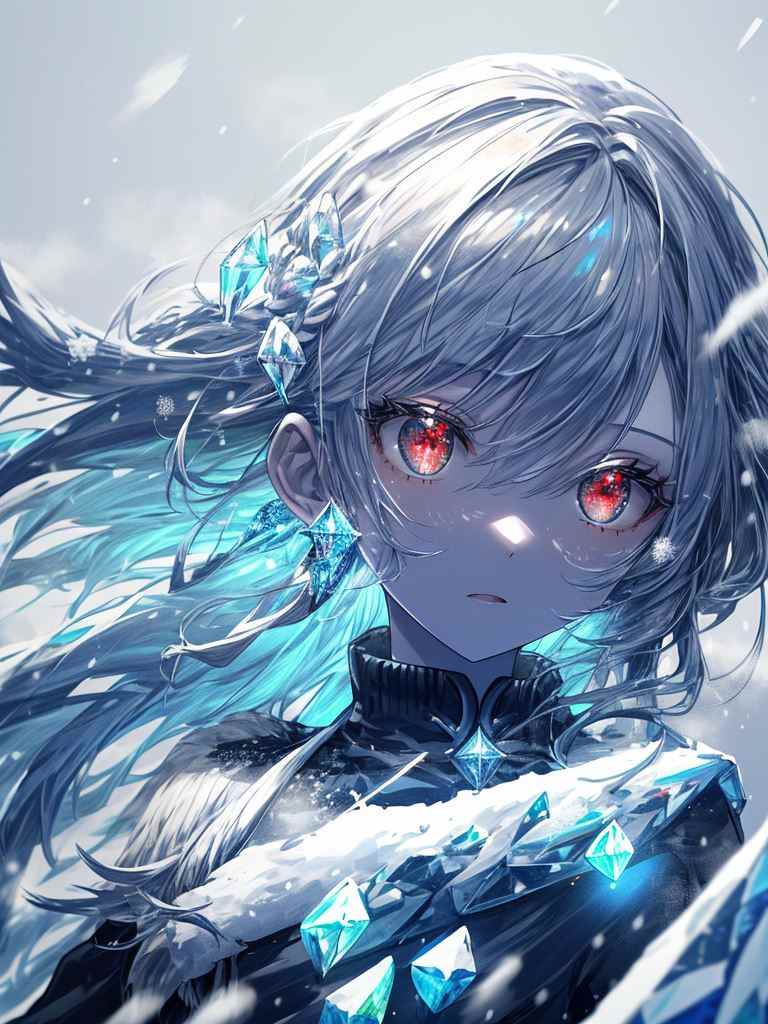
Vampire/Genesis (misunderstandings)
- Genre: Action
- Author: Cross Bearer
- Translator:
- Status: Ongoing
- Rating(4.3 / 5.0) ★
Recommendation Lists
These are recommendation lists which contains《Vampire/Genesis (misunderstandings)》You should give them a visit if you're looking for similar novels to read. Alternatively,
you can also
create your own list.

Popular Reviews
The concept of one god fighting another is incredibly cool, and having their minions battle each other adds an awesome layer. The reason the character score is 8.5 instead of 9.5 is due to "princess" Sienna (Saori Kido), who comes across as a spoiled brat throughout the series. Even though she's the reincarnation of Athena, she has her brothers fight each other, something only revealed later, just to "serve" her. Then they're forced to constantly defend her and her "sanctuary," which benefits no one but her. They have to watch their brothers and mentors sacrifice themselves in the hope that the rest might advance to the next enemy. I just don't like her.
This is a multi-read story; it took me around 4 months, reading for about 2-3 hours a day, 4 days a week. A straight read would likely take 2-3 weeks. <p>
Saint Seiya is a shounen manga that starts off with several promising ideas and shows significant potential. However, it is hindered by numerous issues that prevent it from reaching greatness.
-- THE PROS --
The Cloth armors worn by the Saints, particularly the Gold Cloths and Divine Cloths, are undeniably impressive in design. You might find yourself wishing for such epic armor every time you imagine battling an opponent. Moreover, this manga boasts a diverse array of powerful abilities and techniques, including atom destruction, absolute zero attacks, illusions, telekinesis, barriers, energy blasts, mental assaults, hand-to-hand combat, fighting at light speed, and much more. Among all the special moves wielded by the Gold Saints, Galaxian Explosion and Lightning Plasma stand out as my personal favorites.
There’s no shortage of characters in this series: the Olympian Gods, the Saints, the Mariners, and the Specters. Personally, I have a soft spot for Ikki, Hyoga, and Aiolia because they each shine in moments of sheer awesomeness as they demonstrate their skills to dominate their adversaries.
-- THE CONS --
Firstly, female representation in this manga is severely lacking. The few female characters present are generally weak and largely inconsequential throughout the story. Don’t expect any of the twelve Gold Saints to be women—they’re all men, some of whom lean into the "pretty boy" archetype, creating what feels like a yaoi-baiting boys' club. Athena, as an Olympian Goddess, should theoretically possess immense power due to her formidable Cosmos. Yet, the manga portrays her as mostly helpless and pitiable, constantly requiring rescue by her Saints. It’s unclear why the series fails to include competent and relevant female characters.
Secondly, many battles in Saint Seiya rely heavily on contrived victories. Characters often find themselves in fights where victory seems impossible given the disparity in raw combat stats between them and their opponents. Do they employ clever tactics, strategy, or deception to triumph? No, they rarely do. Do they retreat, train, and return stronger to even the odds? Again, no. Instead, they simply "burn their Cosmos" to match or surpass their foes’ power, defeating them through sheer determination fueled by love for friends, justice, or duty. This trope is overused, with nearly every fight following the same formula: the enemy dominates until the hero ignites their Cosmos to overcome the challenge. This undermines credibility, allowing character strength to fluctuate based solely on plot convenience. As a result, enemies feel artificially hyped, only to fall prey to lazy writing rather than strategic brilliance.
-- CONCLUSION --
Saint Seiya has potential but falls short due to poor execution, offering a mediocre experience overall. While it creatively incorporates Greek mythology, features characters with occasional moments of badassery, and showcases exciting superpowers, it's weighed down by overused tropes and clichés familiar to anyone who's consumed shounen media before. The cast lacks depth, with most characters being male, further marginalizing female representation. Most damningly, the fights frequently rely on unrealistic outcomes, leaving readers disappointed and questioning the narrative's integrity.
In summary, while Saint Seiya isn't a terrible series (I've encountered far worse), if you're seeking a high-quality shounen series, I highly recommend exploring other options.
The titular character, Seiya, is a saint whose journey intertwines with Athena, the goddess of war. The story revolves around Athena and her knights, known as saints, who battle for the love and justice of Earth. Their adversaries range from rogue saints who misuse their powers to divine entities seeking dominion over the planet. Since Athena reincarnates into human form, she must earn the trust of the saints destined to fight alongside her. Among these is Seiya, driven by the desire to reunite with his sister, which compels him to embrace the mantle of a saint. Over time, the saints evolve, setting aside personal desires to find new reasons to fight.
Saint Seiya delves into themes of faith and the challenges it poses to those who bear the title of saint. Characters often confront their beliefs, battling against loved ones or questioning the righteousness of their own ideals. A poignant example involves an antagonist who initially perceives his cause as just due to perceived noble intentions. However, through witnessing the unwavering dedication of his opponents, he learns that there are truths beyond surface appearances, leading to a transformation in his perspective.
At the heart of Saint Seiya lies a unique power system called Cosmo, representing the ability to manipulate atoms. This grants characters destructive capabilities and elemental control, among other powers. The strength of one's Cosmo determines their combat prowess and capacity to alter their fate. There are various methods to enhance Cosmo, including spiritual practices, but perhaps the most iconic is the use of specialized armor called Cloth. These armors correspond to the 88 constellations and fall into three primary categories:
- Bronze: The weakest tier, enabling users to move at supersonic speeds.
- Silver: Superior to Bronze, offering movement ranging from Mach 2 to Mach 8 depending on the specific Cloth.
- Gold: The pinnacle of the hierarchy, allowing users to achieve light-speed velocity.
While wearing a Cloth enhances a saint's power, these armors possess sentience, choosing their wearers based on worthiness. In critical moments, a Cloth might aid another character, such as when Seiya, the Pegasus Saint clad in Bronze Armor, receives assistance from the Sagittarius Gold Cloth to challenge far stronger foes. Yet saints cannot rely solely on their armors, especially when facing enemies capable of piercing them, necessitating alternative means to elevate their Cosmo.
Combat in Saint Seiya is richly varied, thanks to the 88 constellations granting distinct abilities and techniques. Fights transcend mere physical clashes, incorporating personal stakes, philosophical conflicts, and teamwork. One memorable scene sees a character attempting to replicate a strategy used by another to defeat their current foe, only for it to fail due to the enemy's preparedness, adding layers of unpredictability and engagement.
Character development is where Saint Seiya truly shines. Initially selfish and relatable, the saints grow into admirable figures committed to world peace and honor. They inspire each other through acts of sacrifice, fostering mutual respect and camaraderie.
Seiya, embodying the spirit of Pegasus, evolves from a playful and irreverent youth into a selfless warrior willing to risk everything for his comrades and Athena. His focus on hand-to-hand combat with energy-based attacks allows other lead characters to distinguish themselves, enhancing the ensemble dynamic.
Shiryu, the Dragon Saint, wields a devastating blade-like punch imbued with Cosmo, capable of reversing waterfalls. Coupled with his formidable dragon shield, he boasts the highest defense among Bronze Saints. Yet he frequently discards his armor during battles, emphasizing that true strength originates within. Shiryu's willingness to lay down his life for what he holds dear earns him the admiration of allies and foes alike.
Shun, the Andromeda Saint, employs chains for offense, defense, and trapping enemies. While lacking the raw power of others, his versatile chains can reach across vast distances, aligning with his pacifistic nature. Shun hesitates to harm others, warning adversaries before engaging, and resorts to lethal force only as a last resort.
Hyoga, the Swan Saint, specializes in freezing techniques, manipulating atomic motion to halt rather than destroy. His ice-based abilities manifest in diverse ways, from immobilizing foes to creating protective barriers or launching projectiles. Initially motivated by personal desires, Hyoga undergoes significant growth, learning to cherish relationships and embracing Athena's cause despite challenging ideological conflicts.
Ikki, the Phoenix Saint and Shun's older brother, stands out with his robust physique and fire-manipulation skills. His tail-feathers serve as projectile weapons, and his mastery of illusions adds psychological dimensions to his battles. As the group's de facto mentor, Ikki imparts wisdom and guidance, balancing leadership with a solitary demeanor.
The uniqueness of these characters' fighting styles ensures that their abilities complement rather than duplicate each other. This diversity enriches the storytelling and keeps readers engaged.
The Gold Saints further exemplify mentorship and legacy, often sacrificing themselves to safeguard the younger generation. Their actions underscore the cyclical nature of heroism, envisioning the Bronze Saints as future Gold Saints who will, in turn, protect subsequent generations.
Though Saint Seiya's art style began modestly by modern standards, it progressively refined, rivaling contemporary works in detail and quality. Each volume concludes with intricate illustrations and descriptions of the armors, enhancing realism and satisfying enthusiasts.
Despite concluding, Saint Seiya leaves some questions unanswered, echoing issues seen in series like Bleach. Certain plot points, such as a character's apparent death followed by an improbable resurrection, strain credibility. Additionally, a highly anticipated showdown disappoints in execution.
Nevertheless, these flaws do not overshadow the numerous strengths of the series. An ongoing sequel aims to address lingering concerns, though its success remains uncertain.
For fans of Bleach and similar series, Saint Seiya offers an enriching experience filled with compelling characters, dynamic battles, and profound themes. It is a must-read for any enthusiast of the shonen genre.
For instance, it's a combat-centered nekketsu series but features some of the worst fight choreography I've ever encountered. The characters, though numerous, come across as childish and lack depth in personality. It conveys positive messages about love, friendship, and tolerance—surprisingly inclusive toward LGBTQ themes given its era—but these are delivered through poor, overly simplistic dialogue. The narration and storytelling are frustratingly repetitive, transitions are poorly executed, and most arcs lack proper closure. Kurumada seems to struggle with crafting a complete, well-told story, mixing good ideas with atrocious filler elements like evil twins, resurrected characters, black saints, inconsequential silver saints, and more. The manga also suffers from ridiculous power creep, likely to compensate for the author's failure to portray character growth or escalating stakes organically. While things improve as the story progresses—the Hades arc being by far the best—it never quite reaches greatness.
Saint Seiya's primary redeeming quality is its aesthetics, deeply tied to the 1980s, striving relentlessly for a perfect teenage "cool" that Kurumada admirably balances with sensitivity rather than opting for edginess. Character designs are exceptional, attacks are visually inventive, and the incorporation and reinterpretation of (mostly Greek) mythology are skillfully done. Although Kurumada's art starts off somewhat rough, by the end of the manga, his style has matured, and the plates, particularly the double-page spreads, become a true delight to behold.
Aside from nostalgia, one of the main reasons I managed to finish the entire series—while I abandoned Yu Yu Hakusho out of boredom—is ironically due to its repetitive and simplistic nature. This allows readers to breeze through the story, absorbing the good while leaving the bad behind. Once you grasp how each fight will unfold and what each character will say and when, you can almost skip entire sections, stopping only when something interesting happens, either plot-wise or aesthetically. I found myself strangely captivated by this deeply flawed manga, devouring volume after volume in the blink of an eye.
I recently revisited some volumes of the manga, and I can see that the character art is rather subpar by today's standards. However, the characters' armors still look impressive. This is a classic battle manga where victory comes through willpower and friendship. But it's one of the pioneers in this genre, and I still recommend it to anyone who likes battle manga. <p>
This stands as the quintessential example of what to avoid when it comes to "Power Levels." The manga explicitly establishes three types of cloths: the weakest being bronze, the intermediate silver, and the supreme golden cloths. However, these distinctions mean virtually nothing throughout the series. A bronze knight can effortlessly defeat a silver or gold, and the reverse is just as common. Moreover, early in the manga, we already encounter "speed of light" maneuvers, leaving little room for escalation in terms of strength or speed. In my opinion, the series lacked proper planning and was ill-prepared for the level of success it achieved.
The battles are lackluster, to put it mildly. You'll repeatedly encounter the phrase "The same attack never works on a knight twice." This trope dominates more than half of the confrontations, rendering them exceedingly dull.
Conversely, the integration of Greek mythology and constellations was undeniably ingenious and brimming with potential—potential that, unfortunately, went largely unfulfilled.
<p>
1 There's a lack of tension because, from the very beginning, you know that the enemy's "ultimate attack" isn't going to have any real impact. No one ever gets defeated or loses a limb; they just get covered in blood and keep fighting as if nothing happened, even when they're supposedly without their senses or with broken bones. This becomes clear by the end of the 12 Houses arc and remains true until the end of the manga.
2 The characters explain way too many of their moves. Every time a Bronze Knight asks an enemy about their abilities, the enemy always provides detailed answers, which I find absurd.
3 A lot of characters look very similar, almost identical, to the point where the only distinguishing features are their hair and armor.
4 Every opponent underestimates the heroes. They never capitalize on their initial successes, allowing fights to drag on unnecessarily. When they do attempt to take advantage, which is rare, they're always interrupted at the last moment for the convenience of the heroes.
5 Enemies who believe themselves superior to the Bronze Knights are invariably shocked when the Bronze Knight manages to hurt them. This happens with every major enemy.
6 A recurring character acts like a walking deus ex machina, always showing up when the Bronze Knights are in danger or at a disadvantage. The way characters are saved due to "pressure points" or the idea that "an attack won't work twice on a knight" feels cheap and artificial. In general, every possible convenience for the heroes occurs, and every possible mistake by the enemies does as well.
7 The characters are flat. They're all good, pure, incapable of doing anything wrong, and remain the same from start to finish in terms of personality.
8 The manga constantly reminds you how strong the main villain of the arc is and how there's no way for the heroes to defeat them, yet they survive all attacks without sustaining any major injuries.
9 The fight scenes often consist of a single panel showing a character standing while yelling the name of their attack, with the enemy flying away to indicate they've been hit. Actual depictions of punches or kicks landing are almost nonexistent in this manga.
PROS
1 I think the designs of the armors are really well done. They look great, and it's evident that effort was put into thinking about how the armors transition between their folded (when in storage) and extended (when in use) states.
2 The general theme of Greek mythology is interesting and unique. I don't recall reading any other manga with such themes.
3 There are some intriguing plot points, like what happened to a certain character's sister? Or how did another character end up becoming the vessel for such an entity?
In short, I don't really recommend this work. The first two arcs (Galaxian War and the 12 Houses) are enjoyable, but after that, it repeats the same formula over and over until the end.
<p>
Leave a Review
Part 1. Rate (click Star to vote)
Part 2. Login to account
Part 3. Write your review
Directory of Novels. where you can find Novels
Copyright novel cool © 2018–2024 — All rights reserved